October 15, 2026
The Imagery of Holy Week in Cádiz: Centuries of Art, History and Devotion
Holy Week in Cádiz brings together a valuable heritage of religious imagery reflecting centuries of history and tradition. We discover some of its most representative works, their authors, and the essential role of sacred art conservation.
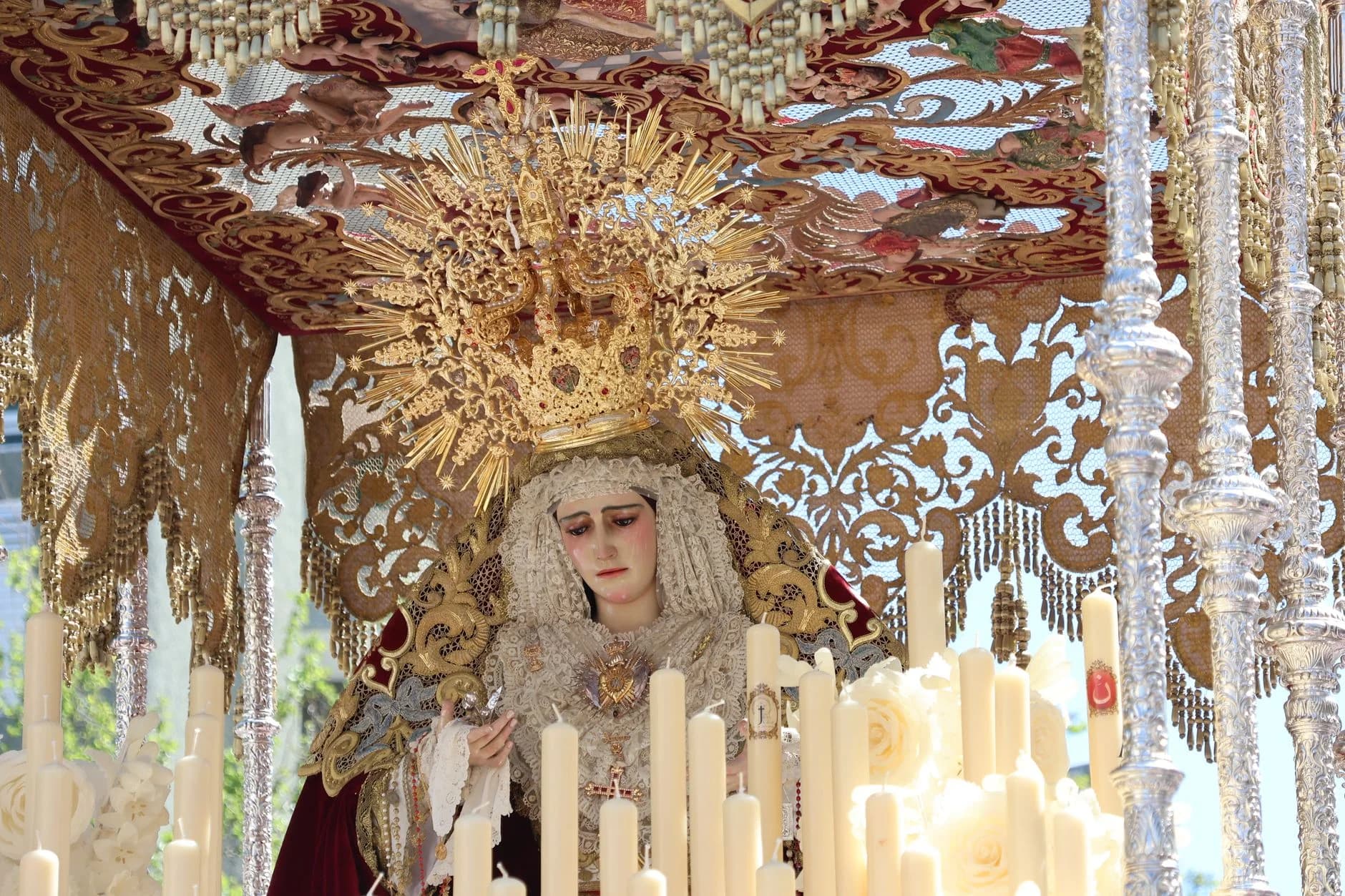
Holy Week in Cádiz is much more than a succession of processions. It is also an expression of the artistic and religious heritage of a city whose history is deeply linked to the sea, trade and the traditions of its brotherhoods.
During these days, the streets of the historic centre become a setting in which to contemplate religious images from different periods, styles and artists. Many of these works form part of an artistic legacy that the brotherhoods have helped preserve over generations.
A Tradition Rooted in the 16th Century
The history of Holy Week processions in Cádiz dates back to the 16th century. Since then, the brotherhoods have played an essential role in the public expression of faith and in the preservation of their images and processional furnishings.
The heritage of these corporations provides an insight into different periods in the history of religious art, particularly the splendour experienced by the city during the 17th and 18th centuries.
Religious imagery occupies a prominent place within this heritage. Representations of Christ, the Virgin Mary and scenes from the Passion bear witness to the techniques, artistic sensibilities and forms of devotion of different periods.
The Most Holy Christ of Humility and Patience
Among the most outstanding works of Holy Week in Cádiz is the Most Holy Christ of Humility and Patience, created by Jacinto Pimentel in 1638.
The image belongs to the Brotherhood of Humility and Patience, associated with the Church of San Agustín.
Its age and authorship make it a reference point for understanding the religious sculptural heritage preserved in Cádiz.
The work reminds us that many processional images are not merely objects of worship, but also pieces of considerable artistic and historical importance.
Our Father Jesus of the Sentence
Another particularly significant image is that of Our Father Jesus of the Sentence.
According to official tourism information from Spain, this sculpture dates from the late 15th century and is considered the oldest processional image in Cádiz.
Its presence during Holy Week allows us to appreciate the continuity of a devotional tradition that has endured through different historical periods.
Works such as this demonstrate the importance of preserving not only their material substance, but also the documentation and historical memory associated with them.
The Craft Behind Sacred Art
Religious imagery is an artistic discipline requiring knowledge of sculpture, materials, anatomy, composition and finishing techniques.
But the heritage of Holy Week is not limited to sculptures.
Goldsmithing, embroidery, ornamental carving and other artisanal works form part of the configuration of the processional floats and objects intended for worship.
Each discipline contributes a different dimension to the whole